Ninth Circle Records · Ensley, Birmingham · 1993–2001
IV · Readings
Three readings, in the order given.
Read without commentary. The congregation may be seated.
I. Ensley
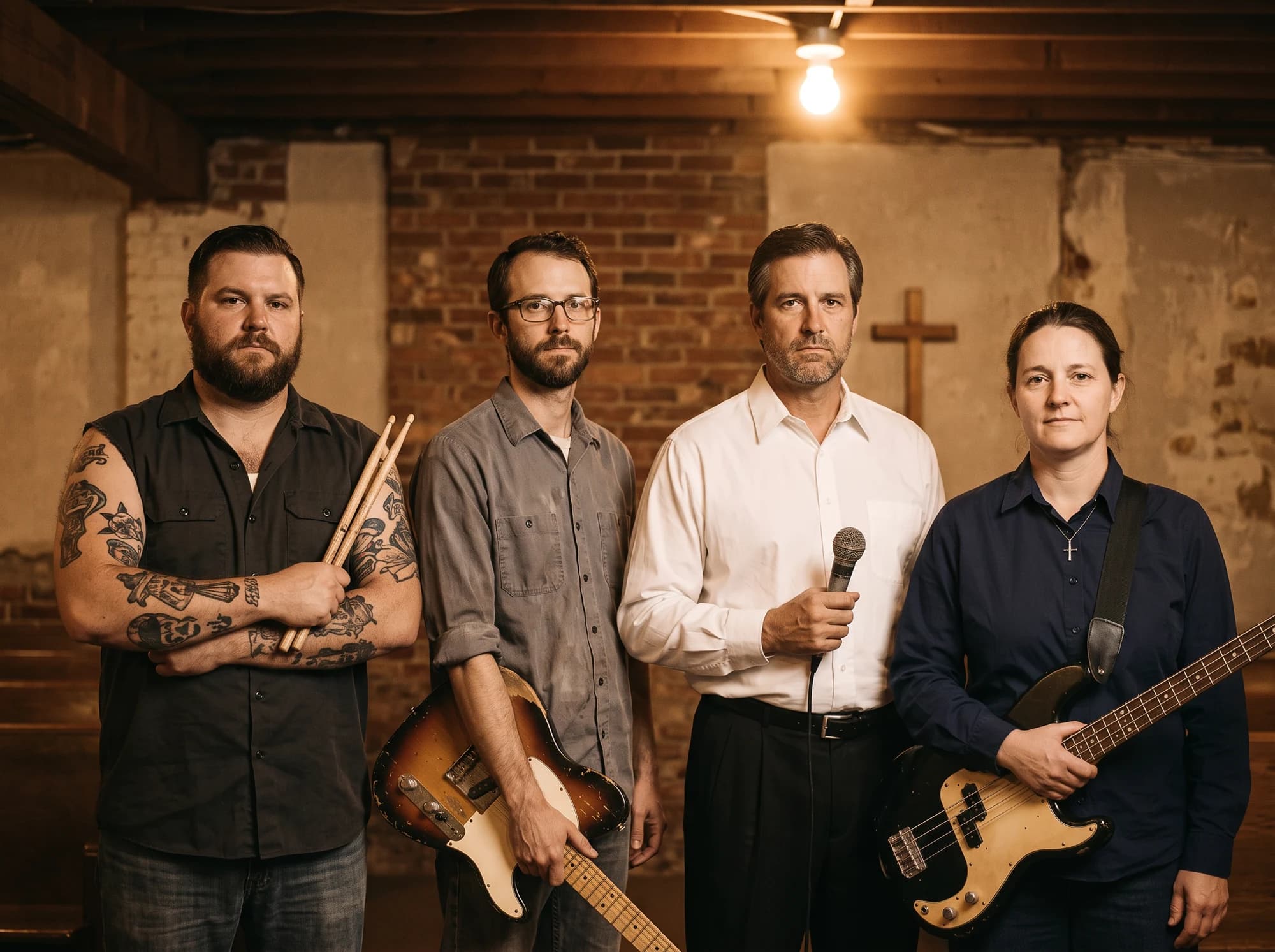
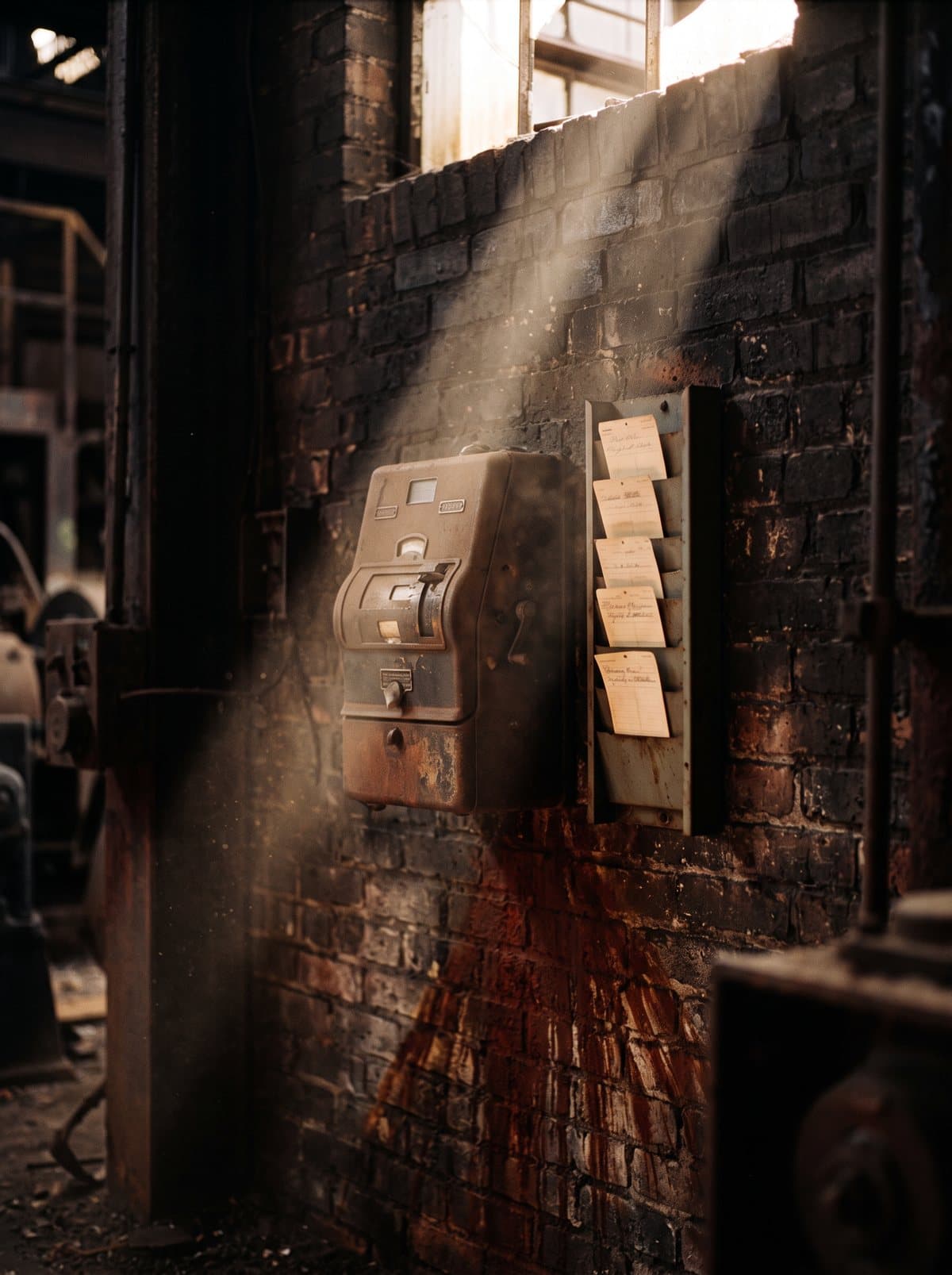
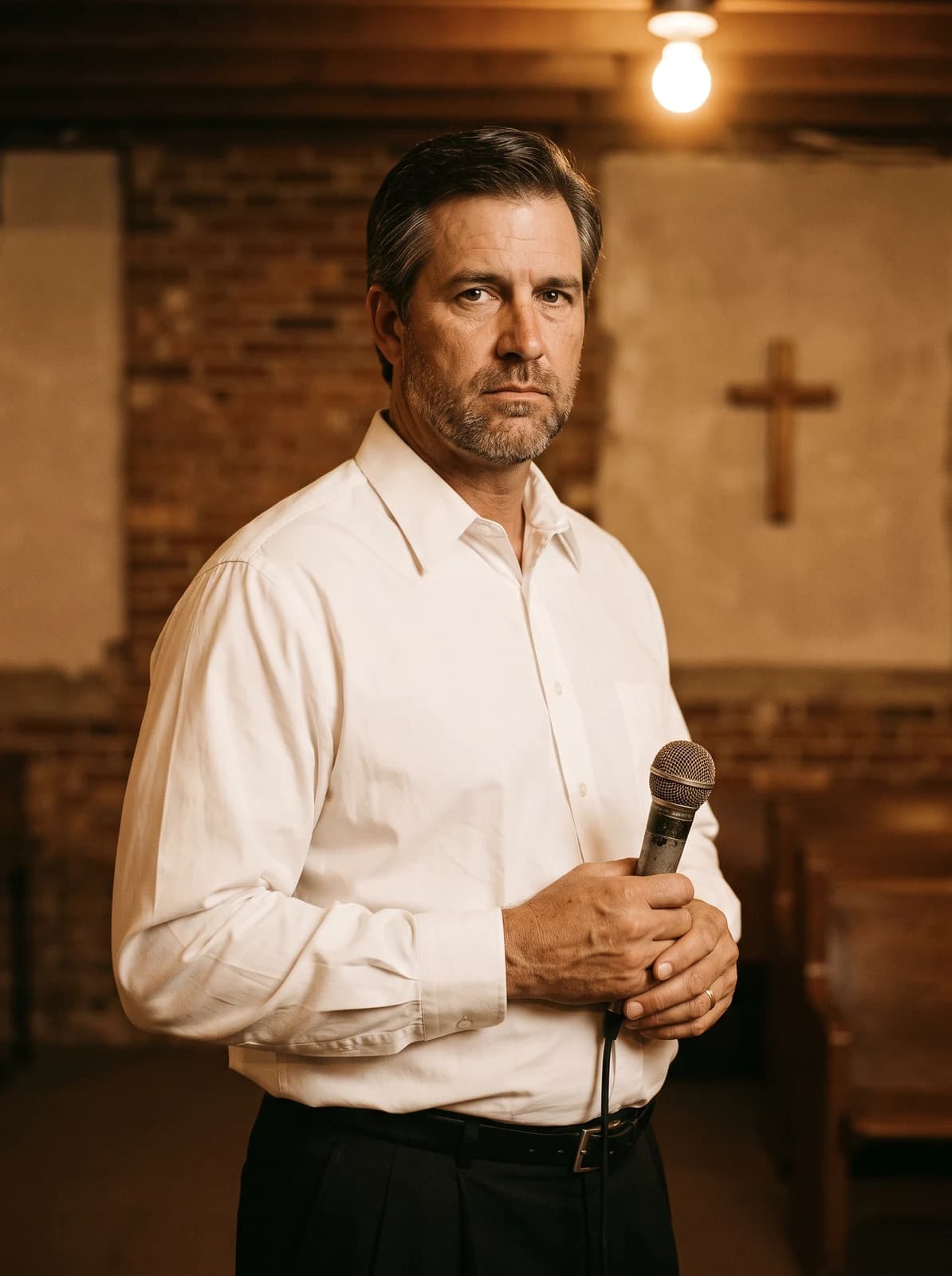
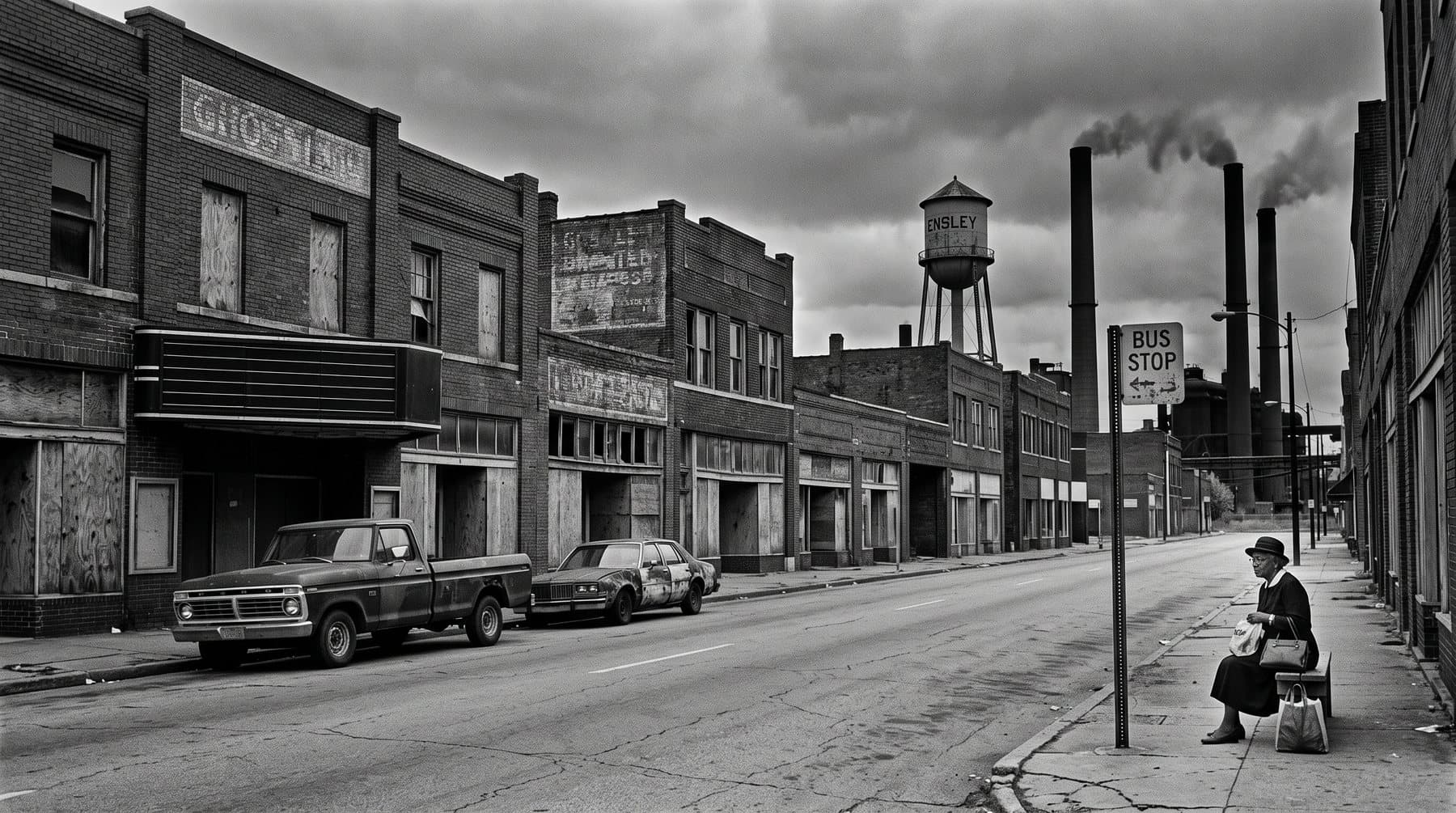
Sloth and Sin began, according to Boyd Halvern, on a specific Wednesday in July 1993 in the parking lot of what used to be Fairfield Works — twenty-five acres of empty steel mill five years after the last shift. Boyd was not there for the mill; he was there because the parking lot was empty and quiet and shaded and he liked to work out songs by walking. He was thirty. He had been out of his father's church for eight years and had watched the neighborhood he grew up in — Ensley, a working-class west-Birmingham neighborhood built around the mills — hollow out one house at a time in the years since.
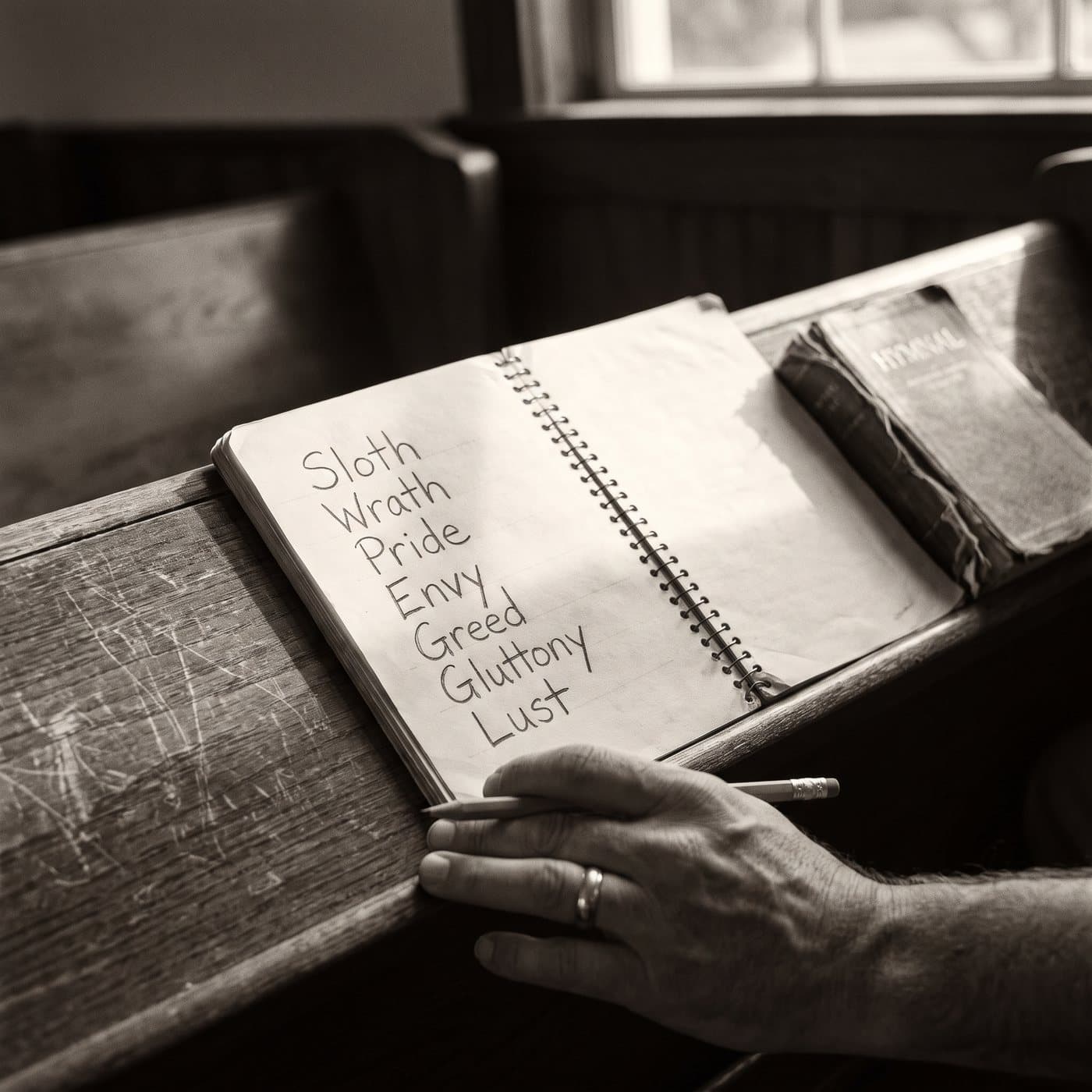
He had, in a notebook he still owned twenty years later, seven single-word titles. Sloth. Wrath. Pride. Envy. Greed. Gluttony. Lust. Each one, in his own idiosyncratic reading, had grown up. The personal vice his father preached against on Sundays had become — Boyd argued, when pressed — a systemic vice. A vice becomes a system when enough of us agree to trade the harder thing we could do for the softer thing we get. That was the sentence around which the band would eventually form.
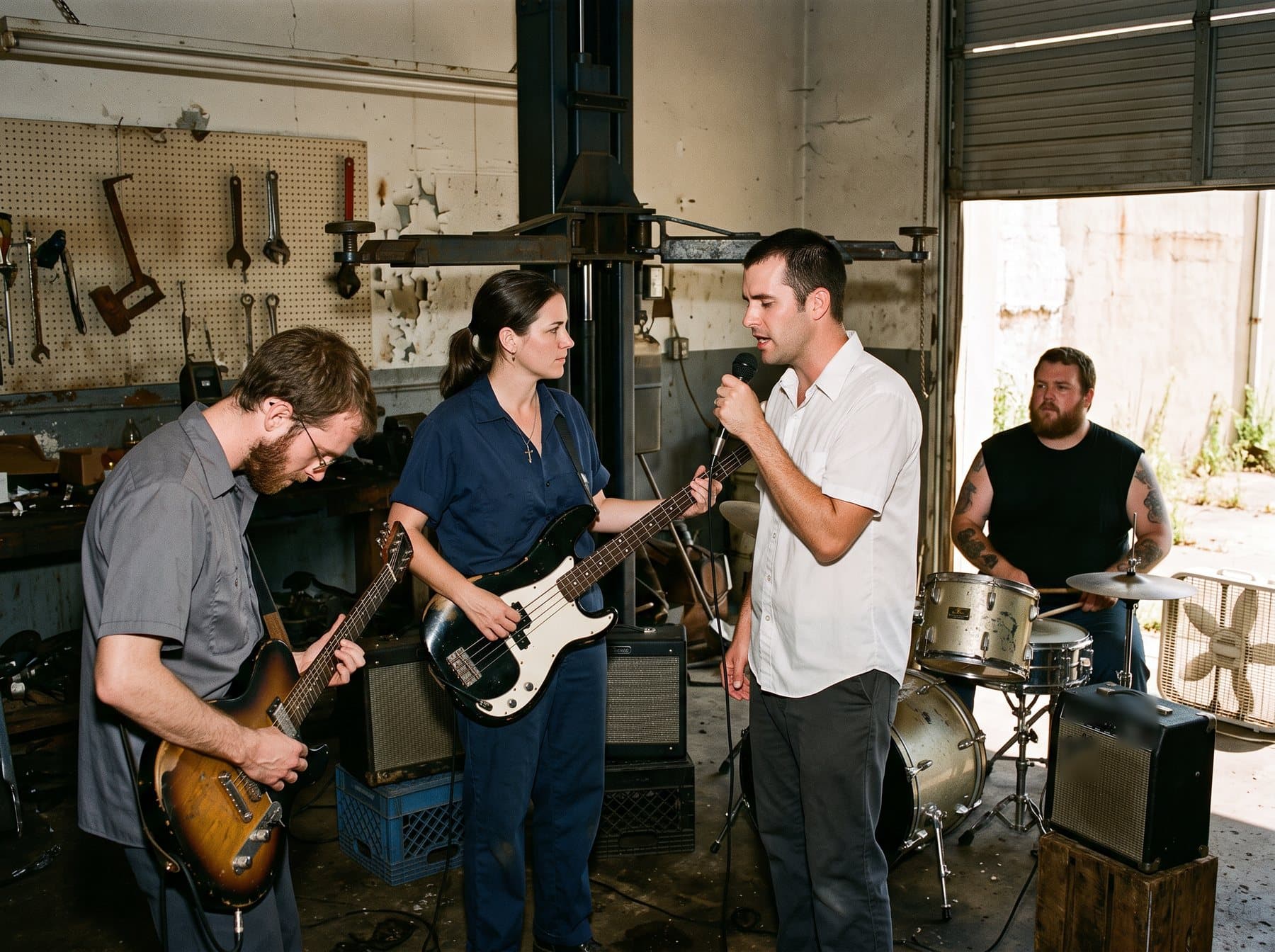
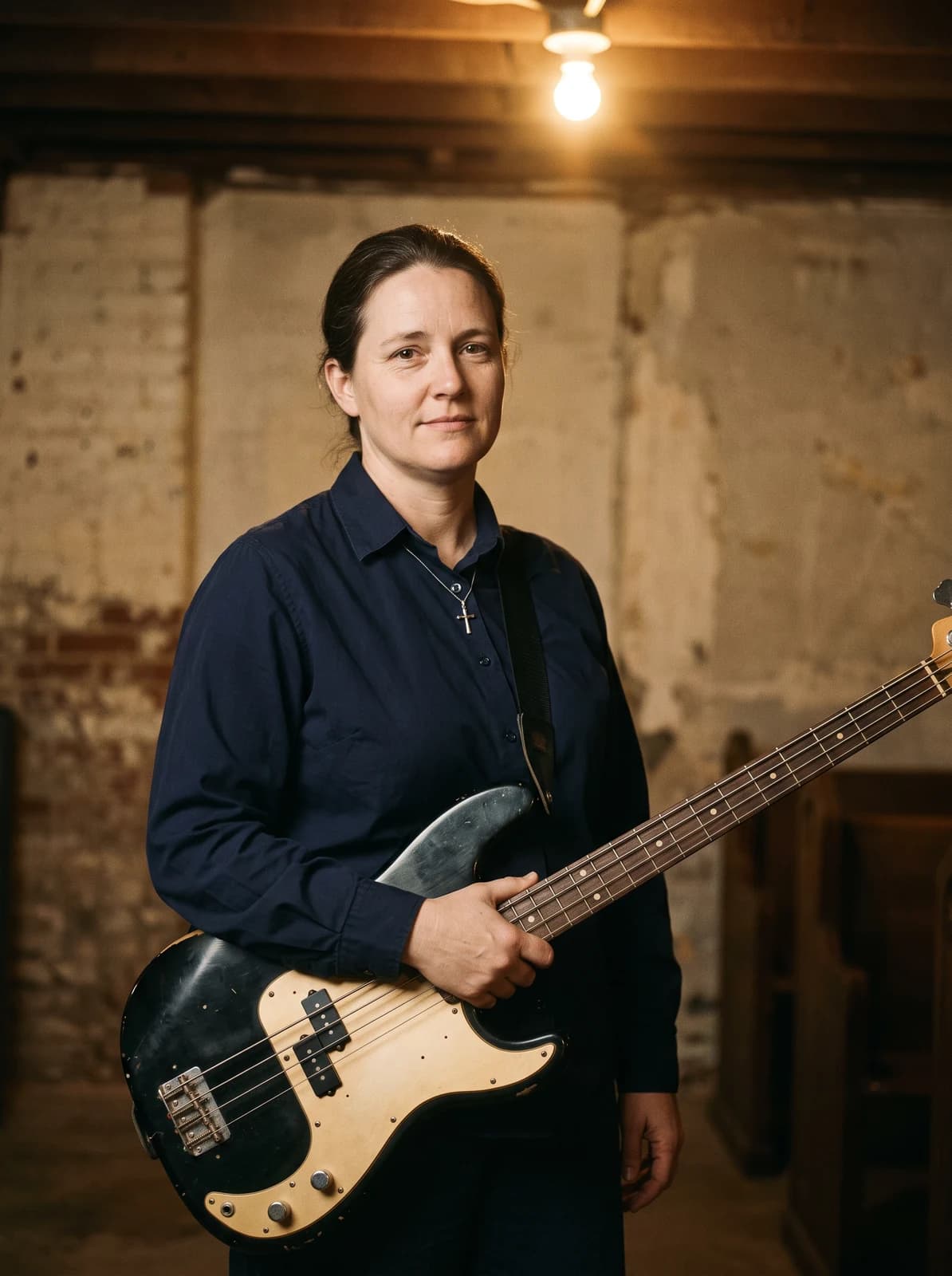
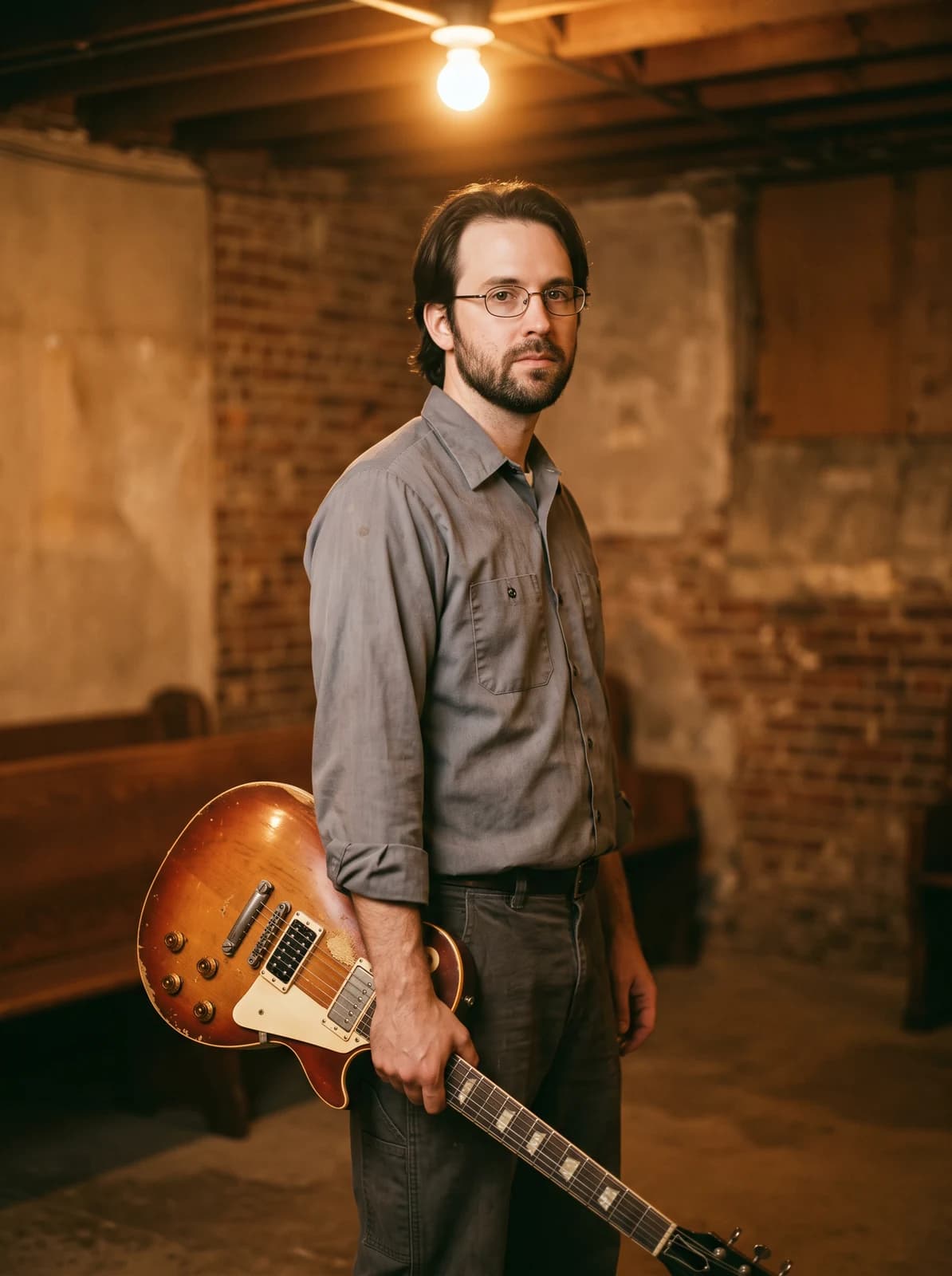
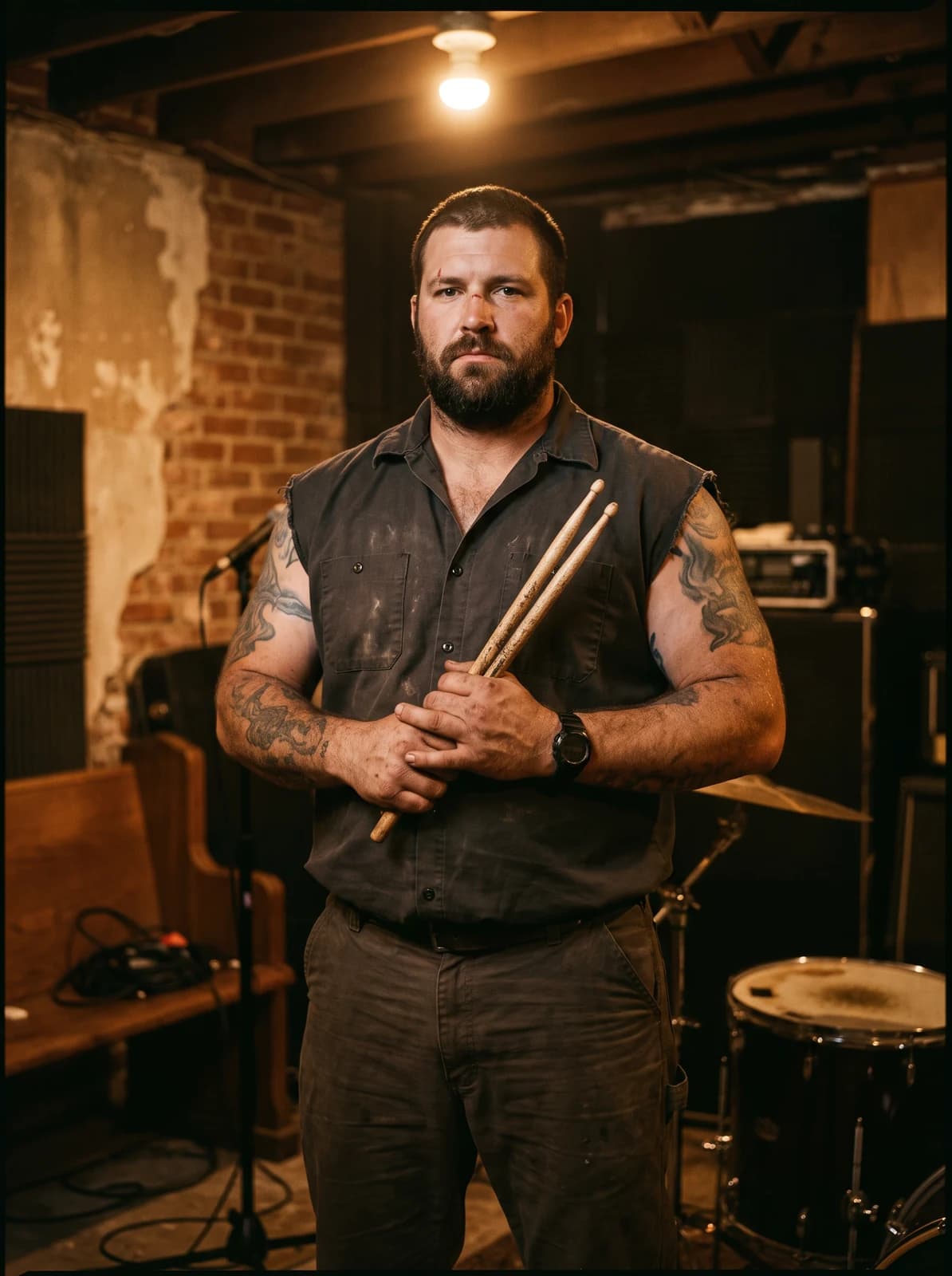
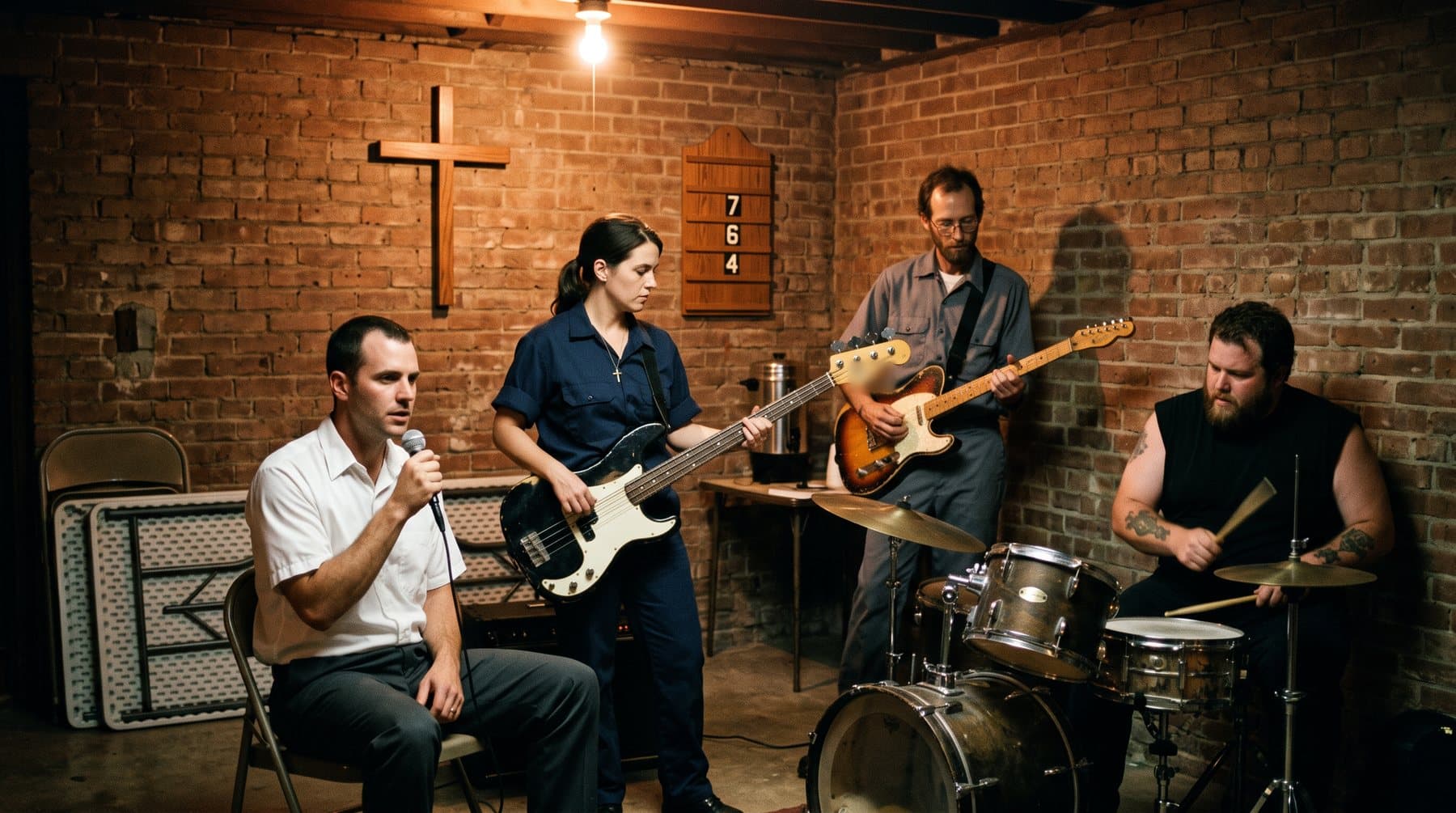
His older sister Mercy — a nurse, thirty-two, mother of two, patient — agreed to play bass over a Sunday supper. Boyd tacked a hand-lettered index card to the doorframe of an abandoned Sinclair auto shop off Bessemer Road: Guitarist wanted for slow band. No fast people. Otis Whitworth read it on his way home from the second shift, called from a payphone, and brought his neighbor Kellum Riordan, who owned a drum kit and worked eight-hour days operating a metal lathe. The four of them met in the back of the auto shop on a Wednesday. They played one riff for forty minutes. Nobody suggested changing it.
Here ends the reading.
II. The Seven Wages
Their debut, The Seven Wages (1994, Ninth Circle Records), followed the notebook exactly. Seven tracks. One per sin. Long, patient, crushingly slow, all in the same tuning — a low C-sharp Otis called "the coal seam." The songs were personal on the surface — the individual weight of the vice, felt from the inside — but the middle verses opened up. Each vice, in Boyd's telling, scaled: sloth became a policy for whole neighborhoods, wrath became an industry, pride became a city planning department, envy became a permanent political tactic, greed became the reason a mill closed, gluttony became a public budget, lust became the last vice anyone was allowed to be plainly against.
The record was not reviewed in the mainstream press. Southern zines took to it — South of Mason-Dixon named it the doom record of the year — and it moved slowly and steadily on the strength of word of mouth and college radio at 2 AM. Ninth Circle Records printed two thousand copies and, over four years, sold them all.
Mercy did not, at first, agree with everything Boyd wrote. She thought "Envy" was too far. She played it anyway. She said, later, that she had been wrong about that specific song and would not name the year she came around.
Here ends the reading.
III. The Ninth Circle and the End
The second record, The Ninth Circle (1997), moved from the personal to the fully systemic. Six long tracks — some over ten minutes, one over eighteen — set in and around the closed Fairfield Works, the emptied Ensley blocks, the Birmingham city offices Boyd could see from his brother-in-law's roof. Otis wrote most of the riffs for this one; the melodies got wearier and Kellum's drumming got sparser. The record ends on "The Ninth Circle" itself — eighteen minutes and forty-two seconds of one unresolved chord and one repeated line: the last vice left in a room full of the others is what's left of us.
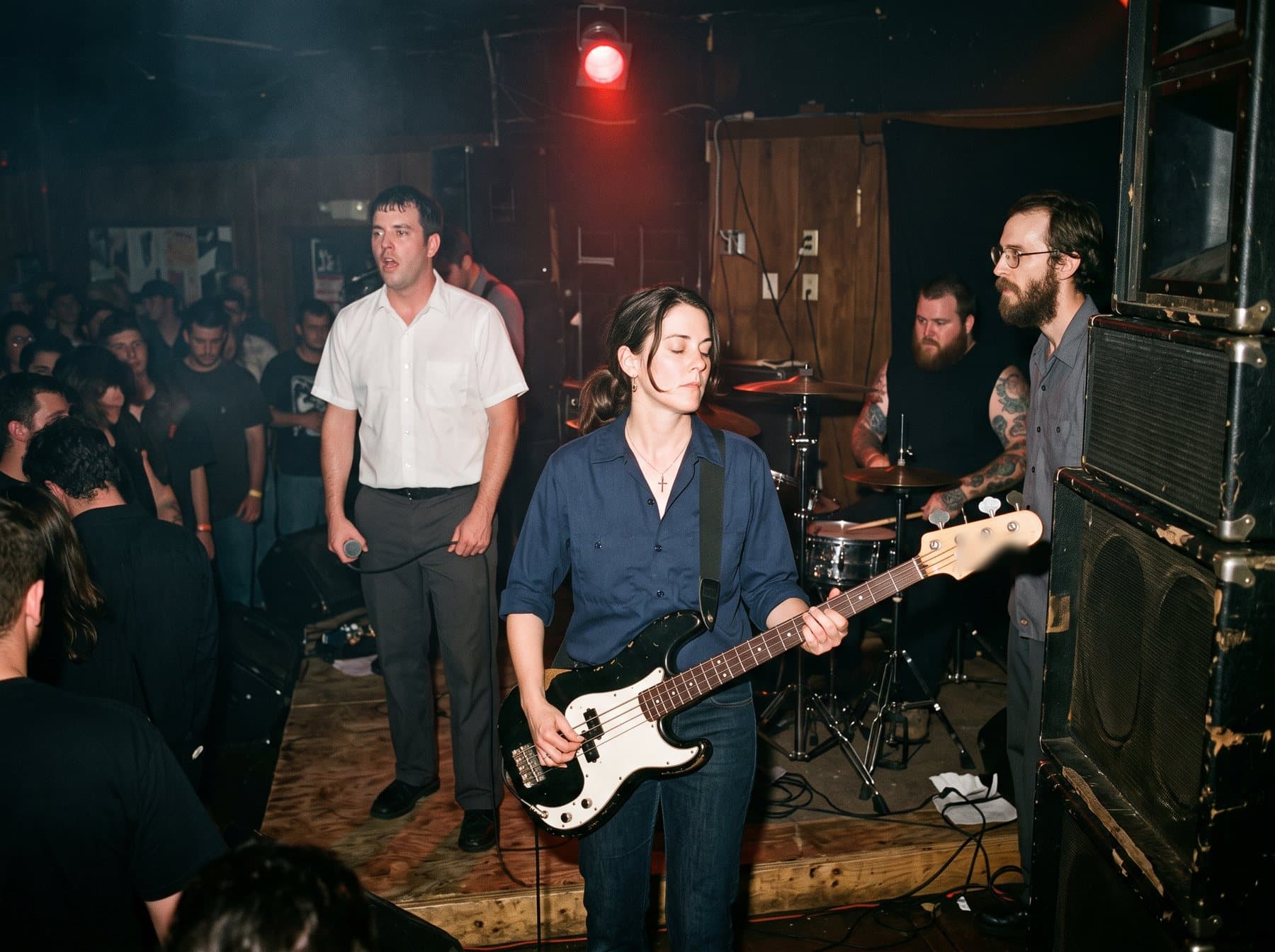
The band toured a rectangle bounded by Nashville, Atlanta, Jackson, and Little Rock for the next three years, with occasional trips north to Louisville and Cincinnati. They did not play in Birmingham. Boyd insisted on this and would not give a reason.
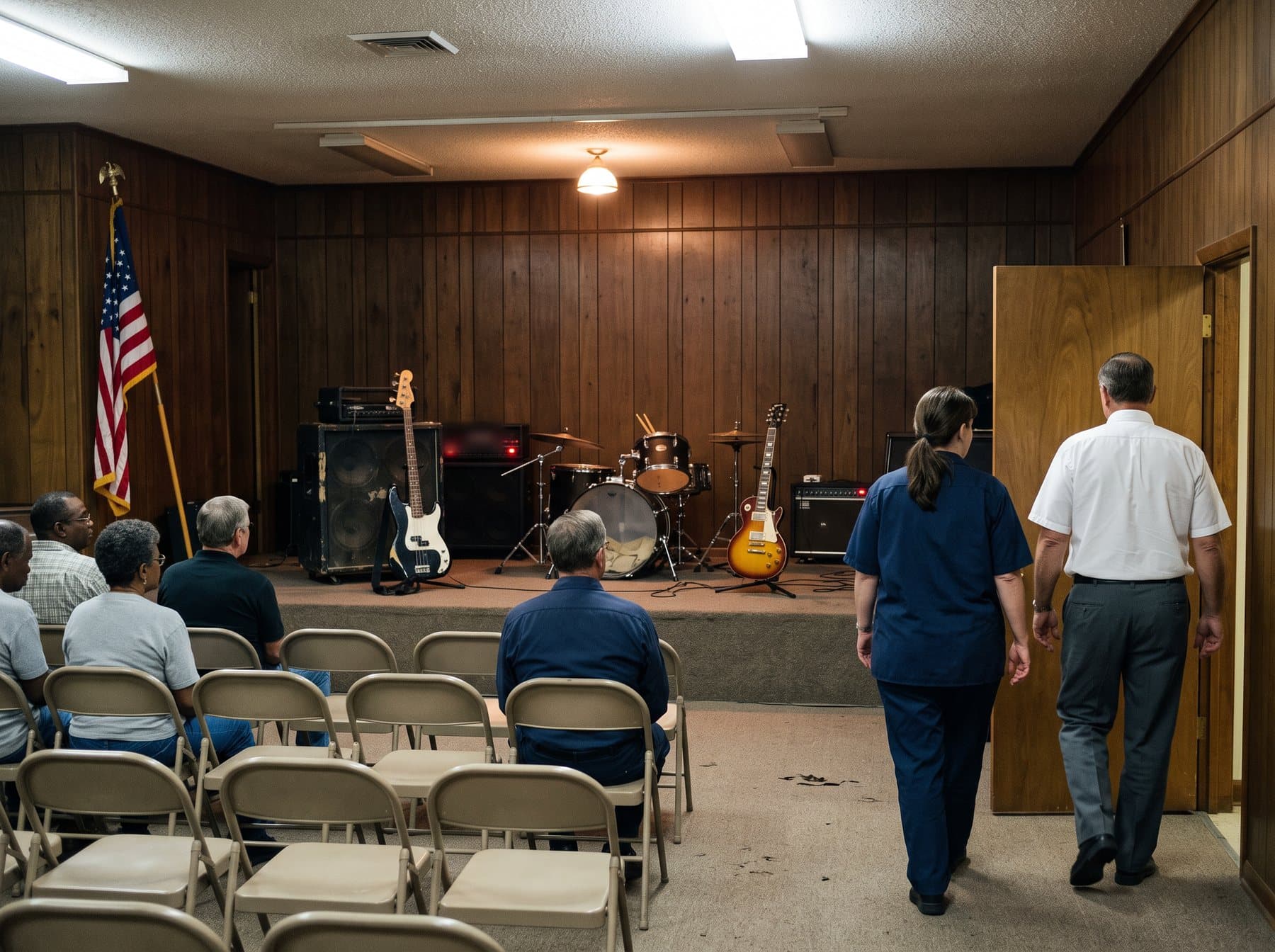
Their last release, an EP called Sabbath Ended (2001), came out three weeks before September 11. Boyd said in the studio, on the day they finished tracking, that the message had gotten as many amps behind it as it needed. Four songs — the shortest and slowest they ever recorded. The band played its final show at a VFW in Anniston, Alabama, on October 13, 2001, walked off during "Sabbath Ended" without finishing it, and did not schedule another. Kellum Riordan has not played drums since.
Here ends the reading.